

Powerful Ways Learning Through Play Builds Early Literacy & Maths
Powerful Ways Learning Through Play Builds Early Literacy & Maths
At Edx Education, we believe children learn best when they are actively engaged, curious, and enjoying the process. Research consistently shows that play is not a break from learning—it is learning. Through play, children build the foundations they need for reading, numeracy, problem-solving, and emotional resilience long before formal schooling begins.
📌 Quick Guide
In this article, you’ll find key sections and practical takeaways:
Why Play-Based Learning Supports Classroom Readiness
Classroom readiness is about far more than knowing letters or numbers. It includes attention, self-regulation, problem-solving, and the ability to cope with challenge. Studies in early childhood education show that children who experience play-rich learning environments develop stronger executive functioning skills such as working memory, flexible thinking, and impulse control.
When children play, they practise waiting, taking turns, making decisions, and persisting when something doesn’t work the first time. These skills directly support a smooth transition into school life.
How Play Enhances Early Literacy
Early literacy begins with language, storytelling, and meaningful interaction. Through imaginative play, children experiment with sounds, words, and narratives in a natural, joyful way.
- Building a story: Playing with open-ended toys supports vocabulary and sequencing.
- Talking through play: Strengthens listening and communication skills.
- Symbolic representation: Mark-making, drawing, and role-play help children understand symbols—an essential step towards reading and writing.
Importantly, play removes the fear of “getting it wrong,” allowing children to explore language freely and confidently.
How Play Builds Early Maths Understanding
Mathematics in the early years is about patterns, quantities, and relationships—not worksheets. Hands-on play gives children real experiences with these concepts.
- Sorting and classifying: Building early data-handling skills.
- Counting during play: Supports number sense.
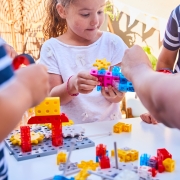
- Building and constructing: Encourages spatial awareness and problem-solving.
Because play is self-directed, children stay engaged for longer, deepening understanding without pressure.
Play, Thinking Skills & Frustration Tolerance
One of the most powerful benefits of play is learning how to cope with challenge. When a tower falls or a puzzle doesn’t fit, children experience frustration in a safe environment.
Through play, they learn to:
- Try again
- Adjust their approach
- Ask for help
- Celebrate effort, not just outcomes
This builds emotional resilience and persistence—skills that are essential for lifelong learning.
Practical Tips for Parents & Caregivers
- Choose open-ended toys that can be used in multiple ways.
- Talk aloud during play to model language and thinking.
- Allow time for children to struggle a little—resist the urge to fix things immediately.
- Celebrate effort and creativity, not perfection.
- Keep learning playful and pressure-free.
Resources to Support You
At Edx Education, we create educational toys and free downloadable resources designed to support play-based learning at home and in early years settings. Our podcast, Play, Learn & Create with Edx Education, shares expert insights and practical ideas to help families nurture confident, capable learners through play.
A Final Thought
Play lays the groundwork for literacy, numeracy, and thinking skills while nurturing confidence and emotional strength. By valuing play, we prepare children not just for school but for life.
By Heather Welch, General Manager, Edx Education UK & author of Happy Children Play
Frequently Asked Questions
Q: How does play-based learning support early literacy?
A: Play encourages storytelling, conversation, and symbolic thinking, all of which form the foundation of reading and writing.
Q: Can play really prepare children for maths at school?
A: Yes. Hands-on play helps children understand numbers, patterns, and spatial concepts in meaningful, memorable ways.
Q: Why is frustration tolerance important for classroom readiness?
A: Children who can manage frustration are more likely to persevere, problem-solve, and stay engaged with learning tasks.
By Heather Welch, General Manager Edx Education UK and author of Happy Children Play
 Edx education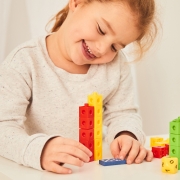
 Edx Education
 Edx Education
 edx education
 edx education
 Edx Education